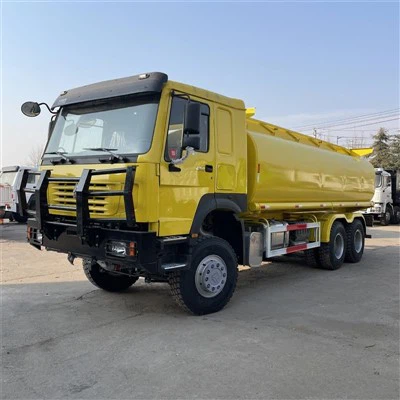
When it comes to the transportation of liquids, tank trailers play a crucial role. As a tank trailer supplier, understanding the braking distances of these vehicles is not only a matter of technical knowledge but also a key factor in ensuring road safety and efficient operations. In this blog, we'll delve into the factors that influence the braking distances of tank trailers and why it's important for both operators and potential buyers to have a clear understanding of this aspect.
Factors Affecting Braking Distances
Vehicle Weight
One of the most significant factors that affect the braking distance of a tank trailer is its weight. Tank trailers can vary greatly in size and capacity, which directly impacts their overall weight. For instance, our 50,000 Liters Aluminum Fuel Tanker is designed to carry a substantial amount of fuel, which means it will be much heavier when fully loaded compared to an empty trailer. A heavier vehicle requires more force to stop, and this translates into a longer braking distance. According to traffic safety research, for every additional ton of weight, the braking distance can increase by a certain percentage, making it essential for drivers to adjust their driving behavior based on the load.
Speed
Speed is another critical factor in determining braking distances. The faster a tank trailer is traveling, the longer it will take to come to a complete stop. This is because the kinetic energy of the vehicle increases exponentially with speed. For example, if a tank trailer is traveling at 60 miles per hour, it will have four times the kinetic energy compared to when it's traveling at 30 miles per hour. As a result, the braking system has to work much harder to dissipate this energy, leading to a significantly longer braking distance. It's crucial for drivers to adhere to speed limits and adjust their speed according to road conditions to ensure they can stop safely within a reasonable distance.
Road Conditions
The condition of the road surface also plays a vital role in braking distances. Wet, icy, or slippery roads can significantly increase the braking distance of a tank trailer. This is because the friction between the tires and the road surface is reduced, making it more difficult for the brakes to grip and slow down the vehicle. For example, on a wet road, the braking distance can be up to twice as long as on a dry road. Additionally, uneven or damaged roads can also affect the performance of the braking system, causing the trailer to sway or skid during braking. Drivers need to be extra cautious and reduce their speed when driving on poor road conditions to compensate for the increased braking distance.
Braking System Efficiency
The efficiency of the braking system is another important factor that influences braking distances. Modern tank trailers are equipped with advanced braking systems, such as air brakes, which are designed to provide reliable and consistent braking performance. However, over time, the braking system components can wear out, leading to a decrease in efficiency. Regular maintenance and inspection of the braking system are essential to ensure it is in good working condition. This includes checking the brake pads, rotors, drums, and air lines for any signs of wear or damage. A well-maintained braking system can significantly reduce the braking distance and improve the overall safety of the vehicle.
Calculating Braking Distances
Calculating the exact braking distance of a tank trailer is a complex process that takes into account all the factors mentioned above. While there are no simple formulas that can provide an accurate estimate, there are some general guidelines that can be used. For example, the Federal Motor Carrier Safety Administration (FMCSA) provides some basic information on stopping distances for commercial vehicles. According to their guidelines, a fully loaded tractor-trailer traveling at 55 miles per hour on a dry road can take up to 400 feet to come to a complete stop. However, this is just a rough estimate, and the actual braking distance can vary depending on the specific conditions.
As a tank trailer supplier, we understand the importance of providing our customers with accurate information about the braking performance of our trailers. That's why we work closely with our engineering team to ensure that our tank trailers are equipped with high-quality braking systems that meet or exceed industry standards. We also provide comprehensive training and support to our customers to help them understand the factors that affect braking distances and how to operate their trailers safely.
Importance of Understanding Braking Distances
Understanding the braking distances of tank trailers is crucial for several reasons. Firstly, it is a matter of safety. By knowing how long it takes for a tank trailer to stop, drivers can maintain a safe following distance and avoid collisions. This is especially important when transporting hazardous materials, as a collision can have serious consequences. Secondly, understanding braking distances can help operators optimize their routes and schedules. By taking into account the factors that affect braking distances, operators can choose the most suitable roads and driving speeds to ensure efficient and safe transportation. Finally, for potential buyers, having a clear understanding of the braking performance of a tank trailer is an important consideration when making a purchasing decision. It can help them choose a trailer that meets their specific needs and requirements in terms of safety and performance.
Our Tank Trailer Offerings
At our company, we offer a wide range of tank trailers to meet the diverse needs of our customers. Our 45000 Liters Aluminum Trailer and 42000L Oil Tanker Trailer For Sale are designed with the latest technology and safety features to ensure reliable and efficient transportation. These trailers are equipped with high-performance braking systems that are designed to provide short braking distances and excellent stopping power. We also offer customization options to meet the specific requirements of our customers, including different tank capacities, materials, and configurations.


Contact Us for Purchasing and Consultation
If you are in the market for a tank trailer, we invite you to contact us for more information. Our team of experts is available to answer your questions and provide you with detailed information about our products and services. Whether you are looking for a standard tank trailer or a customized solution, we can help you find the right trailer to meet your needs. We are committed to providing our customers with the highest quality products and the best customer service. So, don't hesitate to reach out to us and start the conversation about your tank trailer requirements.
References
- Federal Motor Carrier Safety Administration (FMCSA). (n.d.). Commercial Motor Vehicle Braking Distance. Retrieved from [FMCSA official website]
- Traffic Safety Research Institute. (Year). Study on Factors Affecting Braking Distances of Heavy Vehicles. [Publication details]