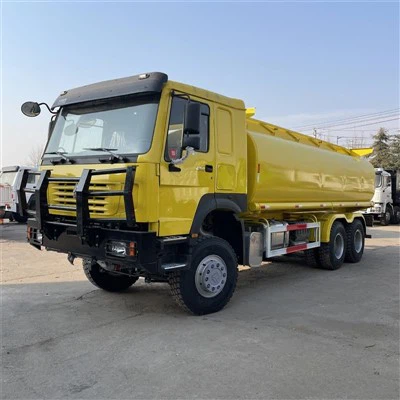
A tank trailer is a crucial piece of equipment in various industries, especially those dealing with the transportation of liquids and gases. As a tank trailer supplier, I understand the importance of reliable level - indicating systems for these trailers. In this blog, we will explore the different types of level - indicating systems used in tank trailers, their advantages, and their applications.
1. Float - Type Level Indicators
Float - type level indicators are one of the most common and traditional level - indicating systems for tank trailers. The basic principle behind this system is the use of a float that rises and falls with the liquid level in the tank. The float is connected to a mechanical or electrical device that provides a visual or digital indication of the liquid level.
Advantages
- Simplicity: Float - type level indicators are relatively simple in design and operation. They do not require complex electronics or power sources in some cases, which makes them cost - effective and easy to maintain.
- Reliability: These indicators have been used for a long time and are known for their reliability. They can work in a wide range of environmental conditions and are less prone to failure compared to some more advanced systems.
Applications
Float - type level indicators are commonly used in small to medium - sized tank trailers, especially those transporting non - corrosive liquids such as water and some fuels. For example, in Aluminum Alloy Liquid Tank Semi - trailer, a float - type level indicator can be a practical choice due to its simplicity and reliability.
2. Ultrasonic Level Indicators
Ultrasonic level indicators use ultrasonic waves to measure the distance between the sensor and the liquid surface in the tank. The sensor emits ultrasonic pulses, which bounce off the liquid surface and return to the sensor. By measuring the time it takes for the pulses to return, the system can calculate the liquid level in the tank.
Advantages
- Non - Contact Measurement: Ultrasonic level indicators do not come into direct contact with the liquid, which makes them suitable for measuring the level of corrosive, viscous, or hazardous liquids.
- High Accuracy: These indicators can provide accurate level measurements, especially in tanks with a relatively stable liquid surface. They can also be used in tanks with irregular shapes.
Applications
Ultrasonic level indicators are often used in tank trailers transporting chemicals, acids, and other corrosive substances. In a 40 KL Fuel Tank Truck Trailer, an ultrasonic level indicator can be used to accurately measure the fuel level, even in the presence of vibrations during transportation.
3. Capacitance - Type Level Indicators
Capacitance - type level indicators work based on the principle of capacitance change. The sensor consists of a probe that is inserted into the tank. The capacitance between the probe and the tank wall changes as the liquid level rises or falls. This change in capacitance is measured and converted into a level indication.
Advantages
- Versatility: Capacitance - type level indicators can be used for a wide range of liquids, including conductive and non - conductive liquids. They are also suitable for measuring the level of liquids with different densities.
- Compact Design: These indicators usually have a compact design, which makes them easy to install in tanks with limited space.
Applications
Capacitance - type level indicators are commonly used in tank trailers transporting various types of liquids, such as oils, solvents, and food products. In a 60000 Liters Fuel Tanker Trailer, a capacitance - type level indicator can provide reliable level measurements for large - volume fuel transportation.


4. Radar Level Indicators
Radar level indicators use radar waves to measure the liquid level in the tank. The radar sensor emits microwave pulses, which are reflected by the liquid surface and received by the sensor. The time difference between the emission and reception of the pulses is used to calculate the liquid level.
Advantages
- High Precision: Radar level indicators can provide highly accurate level measurements, even in challenging environments with high temperatures, pressures, or dust.
- Long - Range Measurement: These indicators can measure the liquid level over a long distance, making them suitable for large - scale tank trailers.
Applications
Radar level indicators are often used in tank trailers transporting high - value or critical liquids, such as liquefied natural gas (LNG) and some specialty chemicals. Their high precision and reliability are essential for ensuring the safe and efficient transportation of these substances.
5. Pressure - Type Level Indicators
Pressure - type level indicators measure the hydrostatic pressure at the bottom of the tank to determine the liquid level. The pressure at the bottom of the tank is proportional to the height of the liquid column above it. By measuring the pressure, the system can calculate the liquid level.
Advantages
- Simple Installation: Pressure - type level indicators are relatively easy to install, especially in tanks where other types of indicators may be difficult to mount.
- Suitability for Viscous Liquids: These indicators can work well with viscous liquids, as they do not rely on the movement or surface characteristics of the liquid.
Applications
Pressure - type level indicators are commonly used in tank trailers transporting viscous liquids such as asphalt and heavy oils. They can provide reliable level measurements even when the liquid has a high viscosity.
Considerations When Choosing a Level - Indicating System
When choosing a level - indicating system for a tank trailer, several factors need to be considered:
- Type of Liquid: Different liquids have different properties, such as corrosiveness, viscosity, and conductivity. The level - indicating system should be compatible with the liquid being transported.
- Accuracy Requirements: The required accuracy of the level measurement depends on the application. For example, in the transportation of high - value liquids, a more accurate level - indicating system may be necessary.
- Environmental Conditions: The tank trailer may be exposed to various environmental conditions, such as high temperatures, humidity, and vibrations. The level - indicating system should be able to operate reliably in these conditions.
- Cost: The cost of the level - indicating system, including the initial purchase cost and the cost of maintenance, should be considered.
Conclusion
As a tank trailer supplier, I know that choosing the right level - indicating system is crucial for the safe and efficient operation of tank trailers. Each type of level - indicating system has its own advantages and applications, and the choice depends on various factors such as the type of liquid, accuracy requirements, and environmental conditions.
If you are in the market for a tank trailer and need more information about level - indicating systems or other features, feel free to contact us for a detailed discussion. We are committed to providing you with the best solutions for your tank trailer needs.
References
- Perry, R. H., & Green, D. W. (Eds.). (2008). Perry's Chemical Engineers' Handbook. McGraw - Hill.
- Shigley, J. E., & Mischke, C. R. (2001). Mechanical Engineering Design. McGraw - Hill.