As a seasoned supplier of concrete mixer trucks, I've witnessed firsthand the critical role these vehicles play in the construction industry. The mixing process within a concrete mixer truck is not just a mechanical operation; it's a finely tuned symphony that ensures the uniform quality of concrete, a cornerstone of any successful construction project.

The Basics of Concrete Mixing
Concrete is a composite material composed of cement, aggregates (such as sand and gravel), water, and sometimes additives. The goal of the mixing process is to thoroughly combine these ingredients to create a homogeneous mixture with consistent properties throughout. A well - mixed concrete batch will have proper workability, strength, and durability.
In a concrete mixer truck, the mixing drum is the heart of the operation. The drum is typically tilted at an angle and rotates continuously during the mixing and transportation phases. The rotation of the drum causes the blades inside to lift and tumble the concrete ingredients, promoting a thorough blend.
Key Factors in the Mixing Process
1. Rotation Speed
The rotation speed of the mixing drum is a crucial factor. When the drum rotates too slowly, the ingredients may not be mixed adequately, leading to pockets of unmixed cement or aggregates. On the other hand, if the rotation speed is too high, it can cause excessive segregation of the ingredients, where the heavier aggregates settle at the bottom and the lighter cement and water rise to the top.
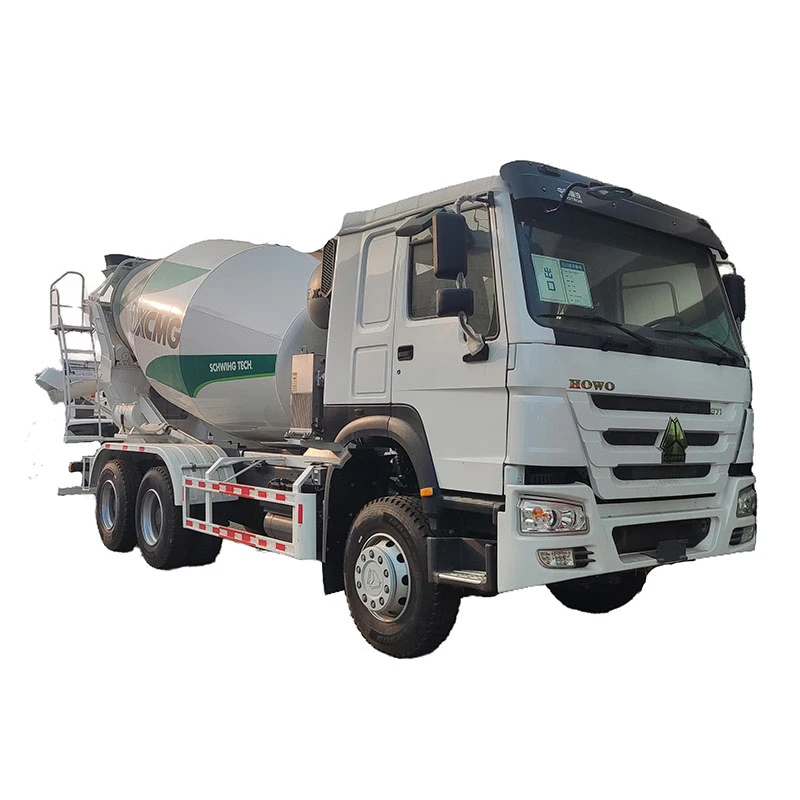
Our Sinotruk Howo 6x4 Cement Mixer Truck is designed with a precise control system for the rotation speed of the mixing drum. This allows operators to adjust the speed according to the type of concrete being mixed, the volume of the batch, and the transportation distance. For example, during the initial mixing phase at the batching plant, a higher rotation speed can be used to quickly blend the ingredients. As the truck travels to the construction site, the speed can be reduced to maintain the homogeneity of the mixture without causing segregation.
2. Mixing Time
The duration of the mixing process is equally important. Insufficient mixing time can result in an uneven distribution of cement paste around the aggregates, which can significantly affect the strength and workability of the concrete. Generally, the mixing time depends on the type of mixer, the volume of the batch, and the properties of the ingredients.
In our experience, for a standard - sized batch of concrete in our Sinotruk Howo 6x4 Concrete Truck, a minimum mixing time of 70 to 90 revolutions of the drum is recommended at the batching plant. During transportation, continuous slow rotation helps to keep the concrete in a well - mixed state. However, it's important to note that over - mixing can also be detrimental, as it can lead to increased water demand and potential loss of workability.
3. Blade Design
The design of the mixing blades inside the drum has a profound impact on the mixing efficiency. The blades are typically helical in shape and are arranged in a way that promotes a three - dimensional mixing action. As the drum rotates, the blades lift the concrete from the bottom of the drum, carry it up the side, and then release it back down through the mixture.
Our HOWO 10 Wheel Concrete Cement Truck features advanced blade designs that are optimized for maximum mixing performance. The shape and pitch of the blades are carefully engineered to ensure that all parts of the concrete batch are thoroughly mixed, regardless of the position within the drum. This helps to eliminate dead zones where the ingredients may not be properly blended.
Additives and Their Role in Mixing
In modern concrete production, additives are often used to modify the properties of the concrete. These can include water - reducing agents, retarders, accelerators, and air - entraining agents. The addition of these additives must be carefully controlled during the mixing process to ensure uniform distribution throughout the concrete.
When using additives, it's important to add them at the right time. For example, water - reducing agents are typically added during the initial mixing phase to improve the workability of the concrete. Retarders, which slow down the setting time of the concrete, can be added later if the transportation time is long. Our mixer trucks are equipped with systems that allow for the precise addition of additives at the appropriate stages of the mixing process.
Quality Control During Mixing
To ensure the uniform quality of concrete, strict quality control measures are implemented during the mixing process. This includes regular testing of the concrete properties at the batching plant and at the construction site. Tests such as slump tests, air content tests, and compressive strength tests are commonly used to assess the workability, durability, and strength of the concrete.
Our company provides comprehensive training to operators on quality control procedures. We also offer on - site support to ensure that the mixing process is carried out correctly. By closely monitoring the mixing parameters and conducting regular tests, we can quickly identify and correct any issues that may affect the quality of the concrete.
Conclusion
The mixing process in a concrete mixer truck is a complex and critical operation that requires careful attention to detail. By controlling factors such as rotation speed, mixing time, blade design, and the addition of additives, we can ensure the uniform quality of concrete. Our range of mixer trucks, including the Sinotruk Howo 6x4 Cement Mixer Truck, Sinotruk Howo 6x4 Concrete Truck, and HOWO 10 Wheel Concrete Cement Truck, are designed to meet the highest standards of mixing performance and quality control.
If you're in the construction industry and looking for reliable concrete mixer trucks that can ensure the uniform quality of your concrete, we'd love to hear from you. Contact us to discuss your specific requirements and explore how our products can enhance your construction projects.
References
- Neville, A. M. (2011). Properties of Concrete. Pearson Education.
- ACI Committee 211. (2014). Standard Practice for Selecting Proportions for Normal, Heavyweight, and Mass Concrete. American Concrete Institute.