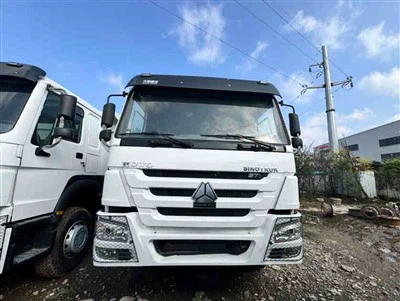
As a supplier of tank trucks, I've witnessed firsthand the critical importance of ensuring the stability of the load during turns. Tank trucks are used to transport a wide variety of liquids, from water and fuel to chemicals and food products. Maintaining load stability is not only essential for the safety of the driver and other road users but also for preventing product spillage and damage to the environment. In this blog post, I'll delve into the various methods and technologies that tank trucks employ to keep their loads stable during turns.
Understanding the Challenges of Load Stability
Before we explore the solutions, it's important to understand the challenges that tank trucks face when it comes to load stability during turns. When a tank truck makes a turn, the liquid inside the tank tends to slosh around due to inertia. This sloshing can create significant forces that act on the tank and the truck's suspension system, potentially causing the vehicle to become unstable and increasing the risk of rollover.
The amount of sloshing depends on several factors, including the shape and size of the tank, the type of liquid being transported, the speed of the turn, and the filling level of the tank. For example, partially filled tanks are more prone to sloshing than fully filled ones because there is more space for the liquid to move around.
Design Features for Load Stability
One of the primary ways to ensure load stability during turns is through the design of the tank itself. Here are some key design features that help minimize sloshing and improve stability:
Baffles
Baffles are internal partitions installed inside the tank to divide it into smaller compartments. These partitions help to reduce the movement of the liquid by creating barriers that slow down the flow of the liquid during turns. By breaking up the large mass of liquid into smaller sections, baffles effectively reduce the forces generated by sloshing and improve the overall stability of the tank.
Tank Shape
The shape of the tank also plays a crucial role in load stability. Tanks with a lower center of gravity are generally more stable than those with a higher center of gravity. For this reason, many tank trucks are designed with oval or cylindrical tanks that sit low on the chassis. Additionally, the shape of the tank can be optimized to minimize the amount of free surface area of the liquid, which reduces the potential for sloshing.
Suspension System
A well-designed suspension system is essential for maintaining load stability during turns. The suspension system helps to absorb the shocks and vibrations generated by the movement of the liquid and the unevenness of the road surface. It also helps to keep the wheels in contact with the road, providing better traction and control.
Modern tank trucks often feature advanced suspension systems that are specifically designed to handle the unique challenges of transporting liquids. These systems may include air suspension, which provides a smoother ride and better load distribution, or hydraulic suspension, which can be adjusted to compensate for changes in the load or road conditions.
Operational Practices for Load Stability
In addition to design features, there are several operational practices that tank truck drivers can follow to ensure load stability during turns:
Speed Management
One of the most important factors in load stability is speed. Driving at a reasonable speed, especially when making turns, is crucial for preventing excessive sloshing and maintaining control of the vehicle. Drivers should slow down well in advance of a turn and avoid making sudden or sharp maneuvers.


Filling Level
As mentioned earlier, partially filled tanks are more prone to sloshing than fully filled ones. Whenever possible, tank trucks should be filled to the maximum capacity to minimize the amount of free space inside the tank. However, it's important to follow the manufacturer's guidelines and regulations regarding maximum filling levels to ensure safe operation.
Route Planning
Careful route planning can also help to improve load stability during turns. Drivers should avoid routes with sharp turns, steep grades, or uneven road surfaces whenever possible. They should also be aware of the weight restrictions and speed limits on the roads they are traveling on and adjust their driving accordingly.
Advanced Technologies for Load Stability
In recent years, advancements in technology have led to the development of several innovative solutions for improving load stability in tank trucks. Here are some examples:
Electronic Stability Control (ESC)
ESC is a safety feature that uses sensors to detect when a vehicle is starting to lose control and automatically applies the brakes to individual wheels to help the driver maintain stability. In tank trucks, ESC can be particularly effective in preventing rollovers caused by excessive sloshing during turns.
Active Suspension Systems
Active suspension systems use sensors and actuators to continuously adjust the suspension settings based on the driving conditions and the movement of the load. These systems can automatically stiffen or soften the suspension to compensate for changes in the weight distribution of the tank and improve stability during turns.
Load Monitoring Systems
Load monitoring systems use sensors to measure the weight and distribution of the load inside the tank in real-time. This information can be used to alert the driver if the load is becoming unstable or if the tank is overfilled. Some load monitoring systems can also be integrated with the vehicle's ESC system to provide additional stability control.
Our Tank Truck Offerings
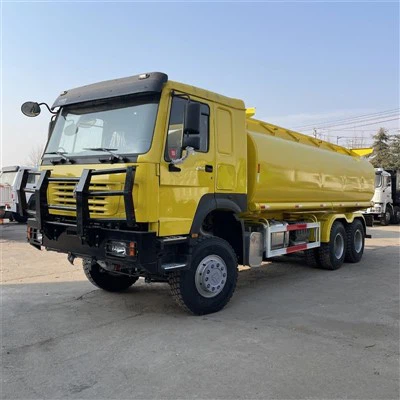
At our company, we offer a wide range of tank trucks that are designed with the latest technologies and features to ensure load stability during turns. Our HOWO 6x4 Water Bowser Truck Diesel Engine For Irrigation is a popular choice for irrigation and water transportation applications. It features a robust design, a powerful diesel engine, and a large-capacity tank with baffles to minimize sloshing.
For those in the fuel transportation industry, our Howo Fuel Tanker Truck is a reliable and efficient option. It is equipped with advanced safety features, including ESC and a load monitoring system, to ensure the safe and stable transportation of fuel.
We also offer the 6x4 Fuel Delivery Truck, which is designed for the efficient delivery of fuel to various locations. This truck features a high-capacity tank, a powerful engine, and a state-of-the-art suspension system to provide excellent load stability during turns.
Conclusion
Ensuring the stability of the load during turns is a critical aspect of tank truck operation. By incorporating design features such as baffles and optimized tank shapes, following operational practices like speed management and route planning, and leveraging advanced technologies like ESC and load monitoring systems, tank truck manufacturers and drivers can significantly reduce the risk of rollovers and other accidents caused by load instability.
If you're in the market for a tank truck that offers superior load stability and performance, we invite you to contact us to discuss your specific needs. Our team of experts is ready to assist you in finding the perfect tank truck solution for your business.
References
- Blanks, R. D., & Merski, D. (2007). Tank truck rollover prevention. SAE International.
- Singh, M., & Singh, S. (2015). Design and analysis of baffles for reducing sloshing in liquid storage tanks. International Journal of Engineering Research and Applications, 5(11), 124-129.
- Yang, Y., & Lin, X. (2018). Research on the dynamic characteristics of liquid sloshing in a partially filled tank during vehicle turning. Journal of Vibroengineering, 20(6), 4039-4050.