

Hey there! I'm a supplier of semi trailer axles, and I often get asked about how the differential works on a semi trailer axle. So, I thought I'd write this blog to break it down for you in a simple and easy - to - understand way.
First off, let's talk about what a differential is. In a nutshell, a differential is a crucial component in the axle system of a semi - trailer. Its main job is to allow the wheels on the same axle to rotate at different speeds. Why is this so important? Well, when a semi - trailer is turning, the outer wheel has to cover a greater distance than the inner wheel in the same amount of time. Without a differential, the wheels would be forced to rotate at the same speed, which would cause a whole bunch of problems.
Imagine you're driving a semi - trailer around a sharp corner. If there was no differential, the wheels would bind up, and it would be extremely difficult to turn. You'd likely experience uneven tire wear, increased stress on the axle and drivetrain, and in some cases, it could even lead to mechanical failures. The differential solves this issue by distributing the torque (the rotational force) between the wheels while allowing them to spin at different rates.
Let's dig a bit deeper into how it actually works. Inside the differential, there are a set of gears. The most common type of differential used in semi - trailer axles is the open differential. It consists of a ring gear, pinion gear, side gears, and pinion gears (also known as spider gears).
The power from the driveshaft is transferred to the pinion gear, which then meshes with the ring gear. The ring gear is attached to the differential case. As the ring gear rotates, it spins the differential case. Inside the case, the spider gears are mounted on a cross - shaft. These spider gears mesh with the side gears, which are connected to the axle shafts that drive the wheels.
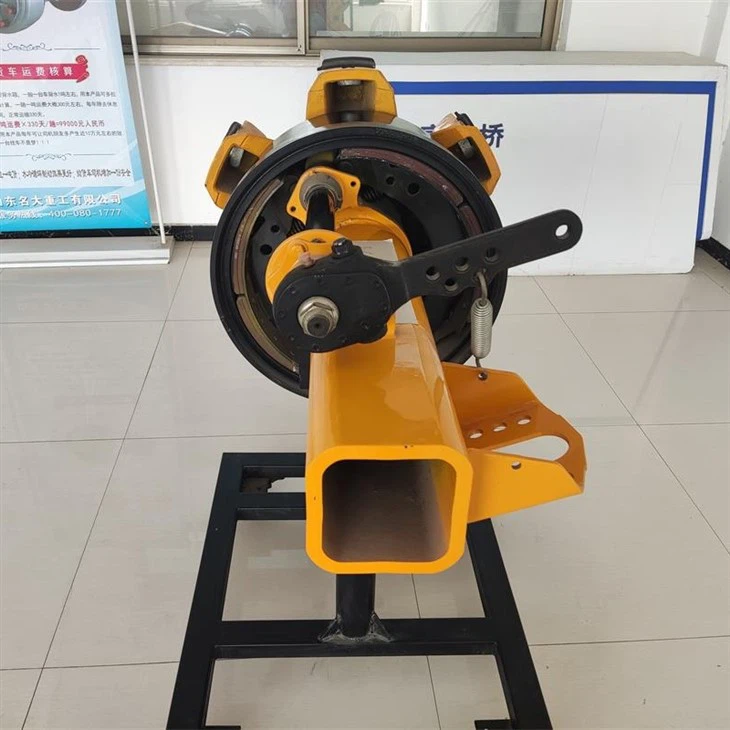
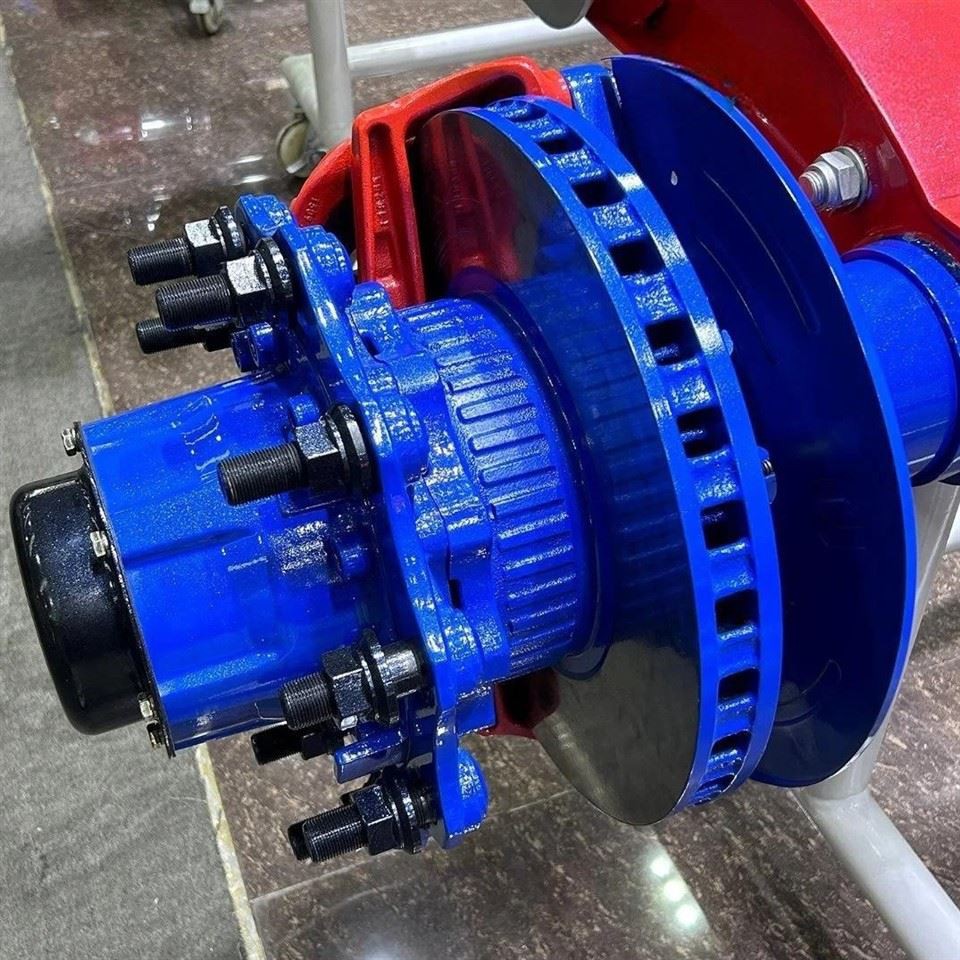
When the semi - trailer is moving in a straight line, the spider gears don't rotate on their own axis. They simply rotate around the cross - shaft along with the differential case. This means that the torque is evenly distributed to both side gears, and the wheels rotate at the same speed.
But when the trailer starts to turn, things get a bit more interesting. As the outer wheel needs to cover more distance, it starts to rotate faster than the inner wheel. The spider gears start to rotate on their own axis, allowing the side gears (and thus the wheels) to rotate at different speeds. The differential distributes the torque between the wheels based on the resistance they encounter. The wheel with less resistance (usually the outer wheel during a turn) will rotate faster, while the wheel with more resistance (the inner wheel) will rotate slower.
Now, there are also other types of differentials that can be used in semi - trailer axles. One such type is the limited - slip differential (LSD). An LSD is designed to provide better traction in certain situations. It works by using clutches or other mechanisms to limit the difference in speed between the wheels. This can be really useful when one wheel loses traction, like on a slippery surface. Instead of all the torque going to the wheel with less traction (which is what happens with an open differential), the LSD transfers some of the torque to the wheel with more traction, helping to keep the trailer moving forward.
Another type is the locking differential. A locking differential completely locks the two wheels on the same axle together, forcing them to rotate at the same speed. This is great for off - road or heavy - duty applications where maximum traction is needed. However, it's not ideal for normal highway driving because it can make turning more difficult.
As a semi - trailer axle supplier, we offer a variety of axles with different differential options to meet the needs of our customers. For example, if you're looking for a heavy - duty axle for long - haul highway use, an open differential might be the best choice as it provides smooth and efficient operation during normal driving conditions. But if you're in an industry where your trailers often encounter challenging terrains or need better traction, a limited - slip or locking differential could be a better fit.
We have some great products in our catalog. Check out our 16T American Type Axle. It's a high - quality axle that can handle heavy loads and is equipped with a reliable differential system. Also, our 13 - 20T American Heavy Trailer Axle is a popular choice for those who need a robust axle for their heavy - duty trailers. And if you're looking for something with a unique design, our Germany Spoke Type Semi Trailer Axle offers both style and functionality.
If you're in the market for semi - trailer axles or have any questions about how the differential works and which type is right for your needs, don't hesitate to reach out. We're here to help you make the best decision for your business. Whether you're a small - scale hauler or a large - scale logistics company, we can provide the right axle solutions for you.
In conclusion, the differential is a vital part of a semi - trailer axle. It allows for smooth turning, even tire wear, and efficient operation. Understanding how it works can help you make informed decisions when it comes to choosing the right axle for your trailers. So, if you're thinking about upgrading or replacing your semi - trailer axles, give us a shout, and we'll work with you to find the perfect fit.
References
- Automotive Engineering textbooks
- Industry - specific technical manuals on semi - trailer axles
